
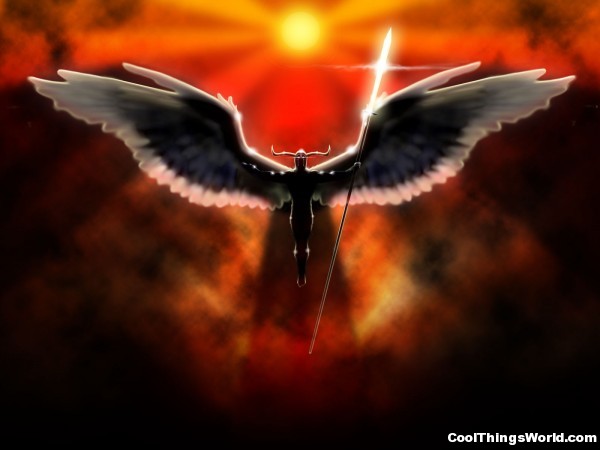
The Twelve Olympians, in Greek mythology, were the principal gods of the Greek pantheon, residing atop Mount Olympus. The Twelve Olympians gained their supremacy in the world of gods after Zeus led his siblings to victory in war with the Titans. There are many who are believed to be a part of these 12 Olympians but we have listed the one with most citations.
Fact: The well known Hades is not generally included in this list. He did not have a seat in the pantheon because he spent almost all of his time in the underworld. Plato connected the Twelve Olympians with the twelve months, and proposed that the final month be devoted to rites in honor of Hades and the spirits of the dead, implying that he considered Hades to be one of the Twelve. Hades is phased out in later groupings due to his chthonic associations.
12. Athena
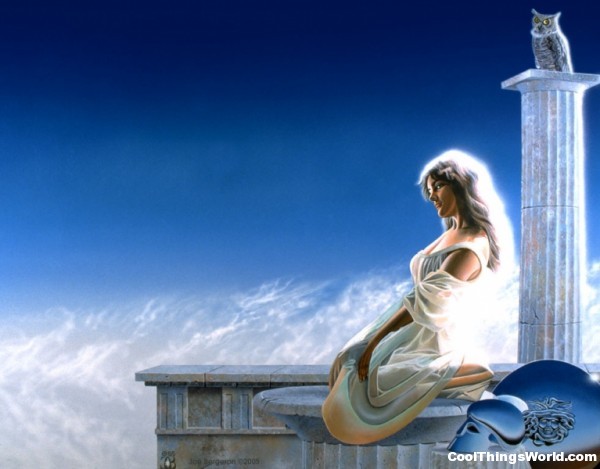
Athena is one of the most beloved deities among the Greek pantheon. She is the goddess of wisdom, honorable war, and justice. Her mother is Metis, Zeus’ first wife, but Athena came out of Zeus’ head after he devoured her mother (Zeus feared that Metis would give birth to a child more powerful than him). Of all his children, Zeus is most favors Athena. There’s nothing much to say about her, other than the fact that she’s really nice.
She is the virgin goddess of wisdom, handicrafts, defence and strategic warfare. One of her epithets (titles) is “Grey-eyed”. Her gift to the Greeks was the useful olive tree. The underside of the olive tree’s leaf is grey, and when the wind lifts the leaves, it shows Athena’s many “eyes”.
11. Ares
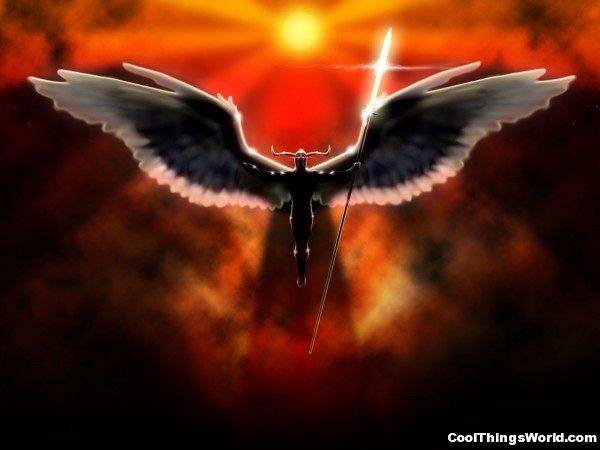
The resident crackpot among the gods, Ares is often described as the Greek god of war. More accurately, he is the god of bloodlust and savagery in warfare, opposed to Athena as patron of strategic war. Ares is identified with the Roman god Mars, but Mars is nothing compared to this kid. According to legend, he is the ancestor of the warrior Spartans and that he discovered the Greek city of Thebes. While some people like collecting comics or potted plants, this guy enjoys wreaking havoc among warring parties. Like James Caan in “The Godfather,” launches wars based on a whim.
He is often portrayed with a spear, a brazen armor, and an eagle owl, which is sacred to him. Soldiers often sacrifice a dog to Ares to gain his favor before an upcoming battle.
10. Demeter

Demeter controls the fertility of the earth as goddess of Agriculture; also gives life after death to those who learn her Mysteries.
Some scholars believe that the mystery rites of Demeter derived from those of the Egyptian goddess Isis. In Graeco-Roman times, they were sometimes considered to be the same or at least strongly similar goddesses.
Ancient Greeks might also dedicate sneezes to Demeter, similar to someone saying “God bless you!” An unexpected or timely sneeze could be thought to have oracular meaning as a message from Demeter, perhaps to abandon the idea under discussion. This may be the origin of the phrase “not to be sneezed at”, not to be discounted or taken lightly.
9. Hephaestus

Master blacksmith and craftsman of the gods; god of fire and the forge. He is in charge of creating weapons for the gods, and his hearth is located in the fiery pits of Mount Etna. Consequently, he is the god of volcanoes. He was also two-timed by his wife and was born with nobody wanting him.
The son of Zeus and Hera, Hephaestus was born crippled. This made his parents disown him and throw him out of Mount Olympus, the home of the gods. It was said that he flew for nine days before landing on the island of Leto, where he was cared for by the natives. Later, when the gods recognized his blacksmith skills, he was reinstated into Olympus.
8. Artemis

Virgin goddess of the hunt, virginity, archery and all animals. Usually, an eternally young woman, beautiful and vigorous, wearing a short costume which leaves her legs free. At Ephesus, Artemis wears a controversial costume which may represent many breasts, fruits, honeycombs, or parts of sacrificed animals. Scholars are undecided on how to interpret her outfit.
Artemis is a freedom-loving young woman who likes to roam the forests with her female companions. She doesn’t care for city life and keeps to the natural, wild environment.
Though Artemis didn’t care much for men, young boys were welcome to study at her sanctuary at Brauron. Statues of both young boys and girls have survived and can be seen at the Brauron Museum.
7. Dionysus
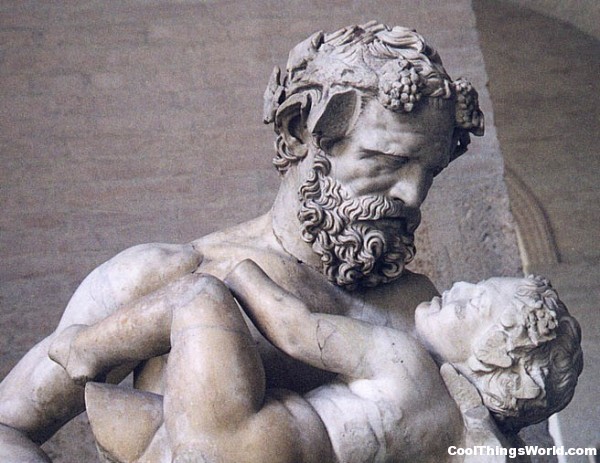
Dionysus, also known as Bacchus, Liber, or Lyaeus, is the god of wine. He is also perhaps the only Olympian still considered a god although he is half mortal. His mother, Semele, had an affair with Zeus. When she was killed by Zeus appearing to her in his true form, lightening, Zeus took the baby, and like Athena, came forth from Zeus’ body, only, Dionysus came from his thigh. This idea is probably associated with his wild reputation and his status as a god of fertility.
He is known for making people, mostly girls give up their responsibilities and go crazy; that is certainly the power wine has over some people. He traveled all across the East with his followers of Maenads (wild girls), Satyrs (men with goat like features pictured with Dionysus as having tails), and the drunken fat man, Silenus.
There are a few stories in Greek myth about those who try to resist Dionysus (wine). Those who tried, were eventually driven mad, and unspeakable deeds. Among these unfortunates are Lycurgus, who in a state of madness prunes his son’s legs, and the Minyads, daughters of King Minyas, who rip apart and eat a child. Ripping apart small creatures is one of the customs of the Maenads who do it to release their inner beast. Also, in festivals dedicated to Dionysus, people paraded around with large phallic symbols (again, he is a fertility god) and ripped apart small creatures. The dolphin is associated with Dionysus as is ivy and vines.
6. Apollo

God of light, music, poetry, prophecy and archery. Symbols include the sun, lyre, bow and arrow, raven, dolphin, wolf, swan and mouse. Twin brother of Artemis. Youngest child of Zeus and Leto.
Apollo is also a master archer, defeating monsters like the snake-like Python with his bow and arrows. The island of Delos is sacred to him, as this is the place where he and Artemis were born. In art, he is depicted as a clean-shaven young man carrying a lyre or a bow. Apollo is also famous for having affairs with both men and women.
5. Hermes

Messenger of the Gods; god of commerce and thieves. Symbols include the caduceus (staff entwined with two snakes), winged sandals and cap, stork and tortoise (whose shell he used to invent the lyre). Son of Zeus and the nymph Maia. The second-youngest Olympian, just older than Dionysus. He married Dryope, the daughter of Dryops, and their son Pan became the god of nature, lord of the satyrs, inventor of the panpipes and comrade of Dionysus.
Hermes is the herald god. He is also known as “the guider of souls.” With his caduceus in his hand, and his winged sandals on his feet, he is swift to lead the souls of the dead to the Underworld where Charon, the ferryman, can then take them over the river Styx and into the realm of Hades. Hermes is also known as a thief. When he was just an infant, he stole Apollo’s herd of cattle, and then to make up for it, gave him the lyre which he made out of a tortoise shell.
4. Poseidon

Lord of the seas, earthquakes and horses. Symbols include the horse, bull, dolphin and trident. Middle son of Cronus and Rhea. Brother of Zeus and Hades. Married to the Nereid Amphitrite, although, like his brother Zeus, he had many lovers.
The three-pronged trident. He is associated with horses, believed to be seen in the crashing of waves on t